Time to bring in any tender plants you want to keep before the first frost, such as begonias and alocasia. Or take cuttings of the plants you want to propagate for next year’s garden. October 15 is approximately the frost date in our area.
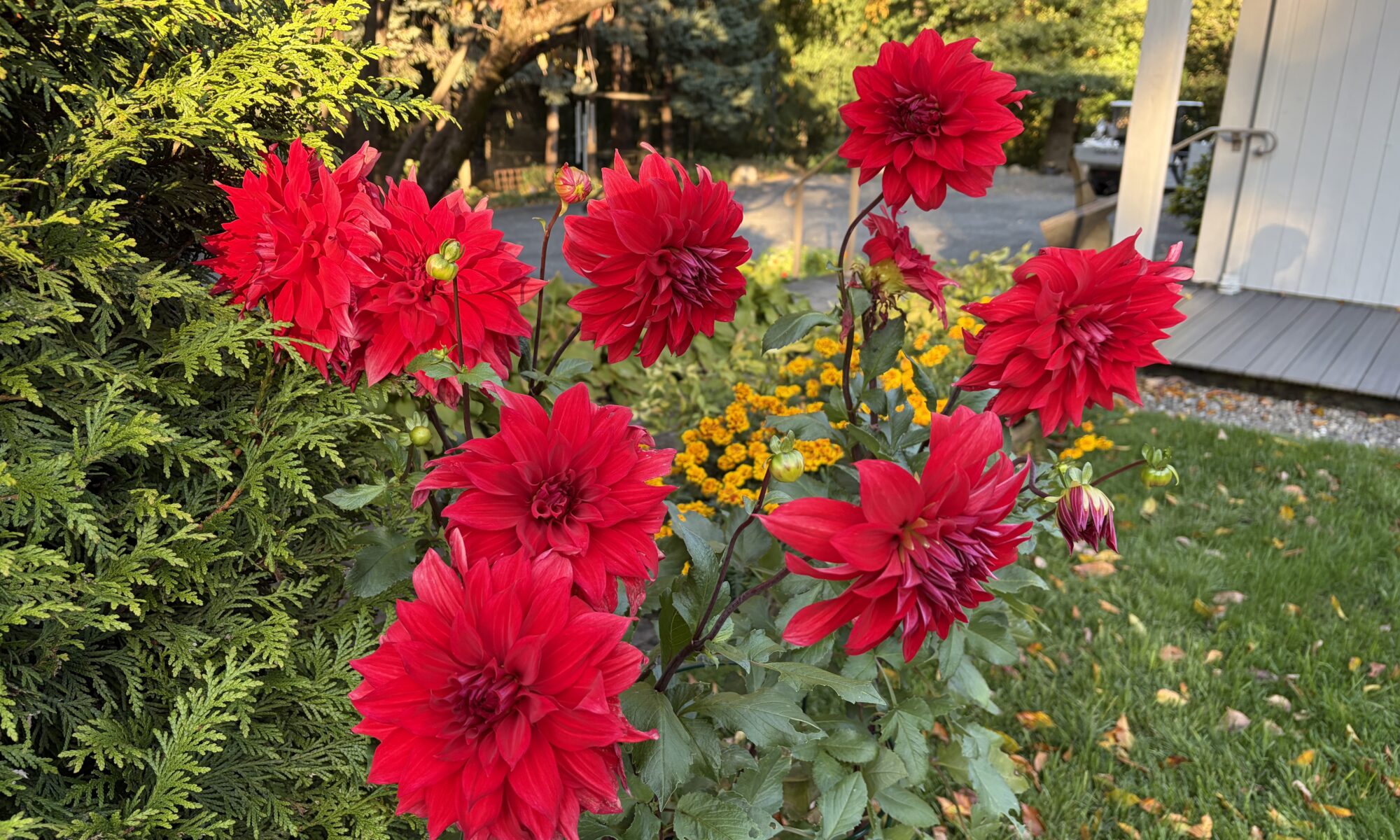
Dahlias and canna plants can stay in the ground or outdoor pots until after the first frost. You may wait a few days after the first frost before cutting off the stalks down to about 6”. Both can either be overwintered in pots in a garage, or should be washed and stored in a cool, dry, dark place – in coco coir in cardboard boxes, Styrofoam boxes, etc.
It’s time to plant spring bulbs, such as tulips, alliums, daffodils, and garlic.
Cut off and clean up Hosta leaves, astilbes and annual plants and put the waste in compost.
Leave tall grasses and hydrangea bloom for winter interests.
October is the best time to transplant. Assess the garden to see where needs more plants, then divide big clumps of perennials and transplant them to fill the empty spaces.
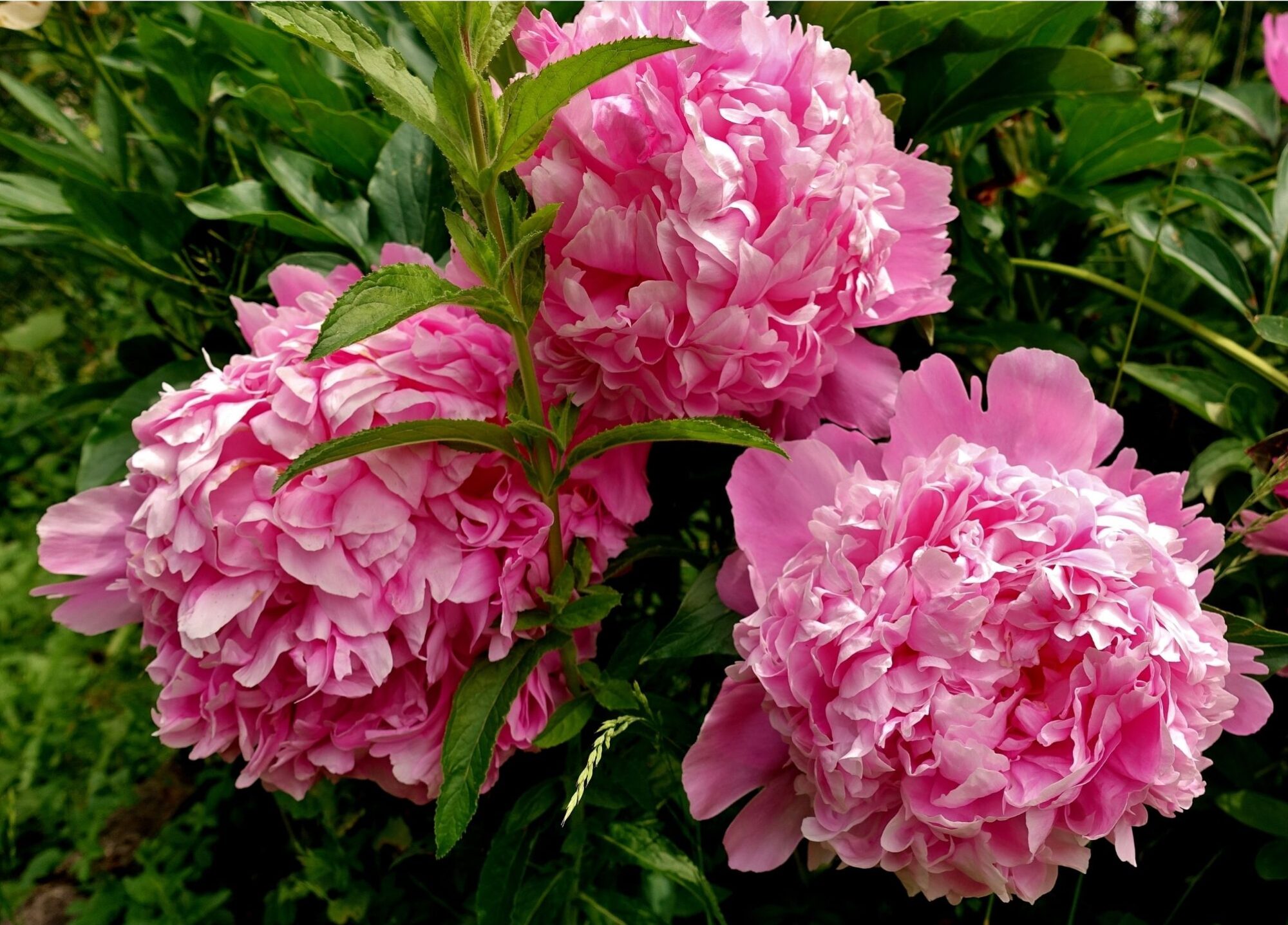
Remove the foliage of problematic perennials such as Bearded Iris and Peonies as it begins to decline or drop to the ground. The Iris foliage serves as a location for the Iris Borer lay their eggs and for Peonies, the old foliage retains the spores for Powdery Mildew. Removing the foliage also helps to eliminate winter cover for mice, moles and voles that love to dine on the starch-rich roots of both plants! (copied from October 2026 gardening notes by Bruce Crawford).
Where possible or in more wild areas, leave the leaf litter behind, since it provides winter habitat for larvae of moths, hibernating native bees, dormant spiders and many other beneficial insects you will be looking for in your garden next year! (copied from October 2026 gardening notes by Bruce Crawford).
If the fallen leaves on the lawn area are not too thick, shred them weekly with the lawnmower and use them as mulch for your flowerbeds. (copied from October 2026 gardening notes by Bruce Crawford)
For seed producing plants like the various species of Rudbeckia (Black-eyed Susan) and Echinacea (Purple Cone Flower), it is best not to cut the flower stems back until spring, since the seeds provide food for Gold Finches and other seed loving birds. Butterflies also seek shelter under flower heads during early fall. (copied from October 2026 gardening notes by Bruce Crawford).
Plant deciduous trees and shrubs! This is an ideal time to plant woody plants, since the soil is still warm, allowing most species to produce roots well into December and preparing them for the stress of next summer. Planting evergreens is fine through the middle of October, but it is best to wait until spring if thoughts of planting go much later. Evergreens continue to transpire water throughout the winter months and without an adequately developed root system and frozen ground, the foliage may dry out with portions of the tree turning brown. The plant may even die during a more severe winter. (copied from October 2026 gardening notes by Bruce Crawford)
For the vegetable garden, remove wilted summer growing vegetable plants, for example: tomatoes, peppers and basil. Cover the vegetable garden that are not planted with compost or manure, then cover it with cardboard boxes to cut down on weeding when Spring comes.
Continue to visit other gardens and nurseries to see what fall colors are blooming that you can add to your garden to make your fall garden more interesting.